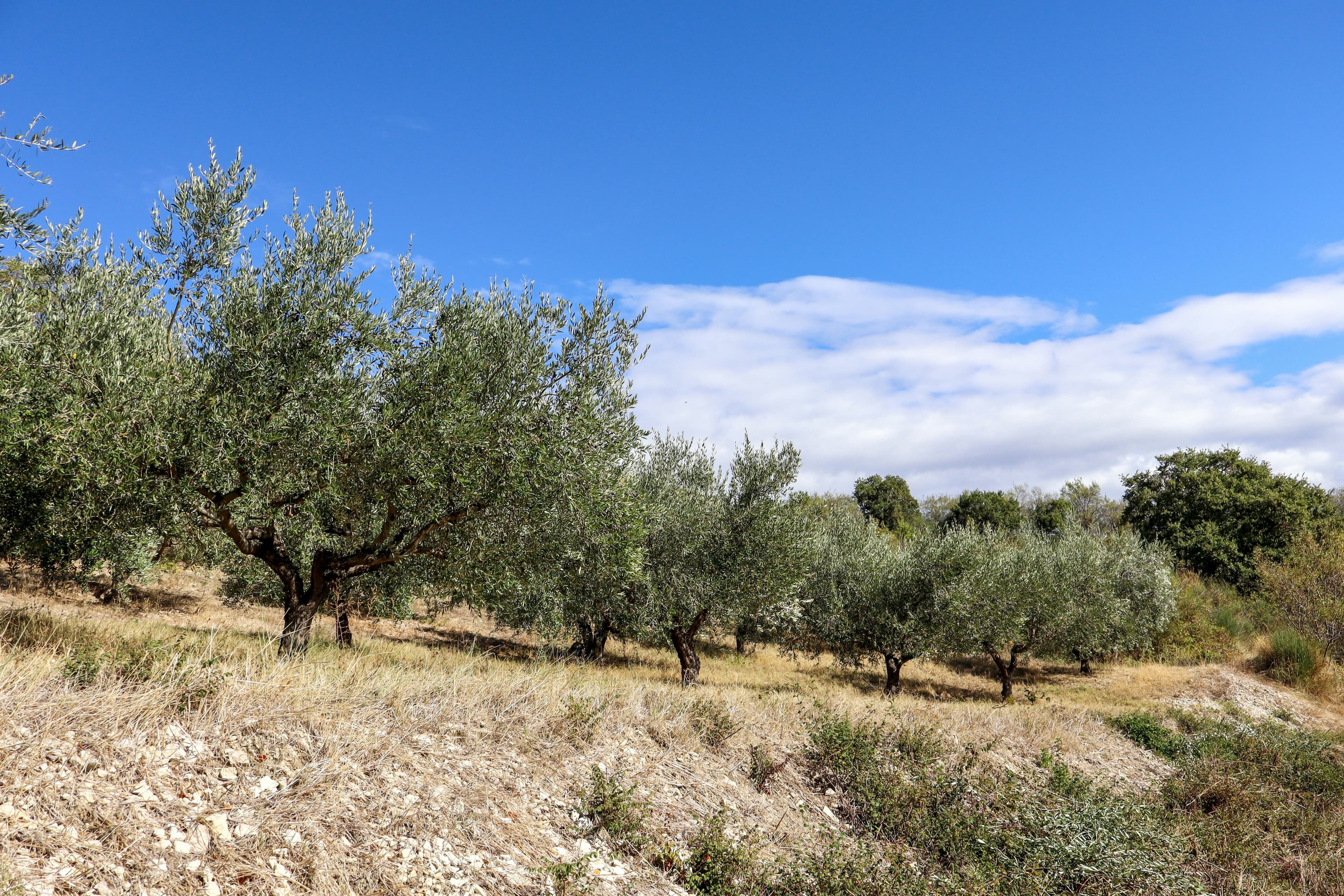
When that benefit is measured and verified, it can become carbon credits, which companies buy to finance climate action. These credits do not replace the need for companies to reduce their own emissions, but they open a way for farmers to earn income from the carbon their farms help to store.
This guide explains what carbon credits are, how they are generated in the agricultural sector, and what opportunities they offer to those who work the land.
1. What are carbon credits?
A carbon credit represents one metric ton of CO₂ equivalent (tCO₂e) reduced or removed through a verified climate mitigation activity. A reduction avoids emissions compared with a reference scenario; a removal takes CO₂ out of the atmosphere and stores it. Not every environmental improvement generates a tradable credit.
Credits can arise from different types of projects, including reforestation, renewable energy, energy efficiency and agricultural activities that increase carbon stored in soils or vegetation or reduce greenhouse gas emissions.
There are two main types of carbon markets:
- Compliance market: established by legislation, such as the EU ETS, which trades emission allowances rather than the voluntary agricultural carbon credits discussed here.
- Voluntary market: organisations purchase credits to support verified climate activities and, where appropriate, address residual emissions. This is the market in which Radica operates.
2. The role of agriculture in carbon sequestration and emissions reduction
Soils hold a substantial store of carbon. Through targeted agronomic practices, farms can increase carbon stored in soil and vegetation or reduce emissions, while potentially improving soil fertility, biodiversity and resilience. The actual outcomes depend on local conditions and how practices are implemented.
Regenerative agriculture aims to improve soil health over time and support beneficial natural processes. Practices that can contribute to soil health, carbon sequestration or broader environmental benefits include:
- Cover crops: protect the soil from erosion and support soil life.
- Reduced tillage (no-till, minimum tillage): can protect soil structure and reduce disturbance.
- Compost, biochar, manure and agro-food byproducts: can supply organic matter or nutrients, with different effects depending on the material and its use.
- Agroforestry, multifunctional hedgerows and buffer strips: increase vegetation and support biodiversity.
- More efficient use of fertilizers and reduced reliance on pesticides: can lower certain environmental impacts, depending on the practice.
- Compost tea and natural biostimulants: may support crop management, but their use does not itself establish a carbon benefit.
Not all regenerative practices generate carbon credits directly. Eligibility depends on the applicable methodology and the climate benefit that can be measured and verified. Within the AgroEcology Italy project, Radica has identified 13 regenerative practices covered by its project protocol. Credits depend on the verified results of the project, not simply on adopting a practice.
3. How are carbon credits generated in agriculture?
To generate credits, an agricultural project follows the rules of its chosen certification standard and methodology. Requirements differ between programmes. The steps below describe the process within Radica's AgroEcology Italy project:
- Enrollment in the project: the farm enters a 15-year agreement. The stated minimum area is 3 hectares for tree crops or 10 hectares for arable land.
- Selection and implementation of regenerative practices: the farmer adopts at least three new practices from the project protocol, such as cover crops, reduced tillage, organic matter inputs or sustainable residue management.
- Ongoing monitoring: Radica monitors relevant changes in soil and biomass through a combination of soil analysis, satellite data and digital tools, according to the project methodology.
- Independent verification: an independent body checks the project documentation, methods and reported results against the applicable standard.
- Issuance and registration of credits: following successful verification, eligible credits are issued in a carbon registry, where their issuance and subsequent use can be tracked.
Credible credits depend on additionality, sound measurement, management of reversal risks, independent verification and traceability. The participation terms described are specific to AgroEcology Italy.
4. Certifying agricultural carbon credits
To be credible, agricultural carbon credits must meet the requirements of the applicable standard. Here is what the main criteria mean in practice:
- Additionality: the project must demonstrate climate benefits beyond those expected under a baseline scenario, that is, what would likely happen without the project. Adopting a new practice can support this assessment, but is not, on its own, proof of additionality.
- Permanence and reversal risk: stored carbon may be released again. Farmers' 15-year commitment is one part of project management, but it is not a guarantee that carbon will stay stored indefinitely. Monitoring and reserves of credits held back from sale, known as buffer pools, help manage this risk.
- Conservative measurement: credits must be calculated using the monitoring and accounting methods required by the relevant methodology, with uncertainty taken into account to reduce the risk of issuing too many credits.
- Traceability and transparency: credits recorded in a registry can be identified and tracked through issuance and retirement. Registry records and independent verification serve different purposes: traceability alone does not prove the climate outcome.
Standards and independent assessment: AgroEcology Italy is registered with the International Carbon Registry (ICR). Earthood is the independent body that verifies the project under the applicable rules. A carbon credit rating, where available, is a separate assessment and is not itself a certification.
How the dual-buffer system works within AgroEcology Italy:
- Registry buffer: 10% of credits goes into ICR's shared pool. If previously credited carbon is released in a project on the registry, credits are cancelled from the pool to cover the loss.
- Permanence buffer: 10% of the farmer's share, already net of the registry buffer, is retained. This is a financial retention, separate from the registry's credit reserve. The retained amount is released in three tranches: 25% at year five, 25% at year ten and 50% at year fifteen. If a farmer leaves the programme before the contract ends, they forfeit the amounts still retained.
The European framework is also evolving. Regulation (EU) 2024/3012 established the voluntary Carbon Removals and Carbon Farming Certification Framework (CRCF). Rules on certification schemes, certification bodies and audits followed in 2025. In July 2026, the European Commission adopted specific carbon farming methodologies; as of 24 September 2026, their adoption by the Commission should not be described as certification of existing voluntary projects under the CRCF. Recognition under this EU framework is distinct from certification under an existing voluntary standard.
EU Member States are required to apply the national measures implementing Directive (EU) 2024/825 from 27 September 2026. These rules prohibit consumer-facing claims that a product has a neutral, reduced or positive greenhouse gas impact on the basis of emissions offsetting. Purchasing credits remains possible, but it does not justify such product claims.
5. Opportunities for farmers
Participating in a carbon farming programme can offer:
- An additional source of income: subject to verified results, credit issuance, sales and the terms of the agreement.
- Potential synergies with agricultural support schemes: subject to eligibility conditions and rules that prevent the same climate benefit from being funded twice.
- Environmental benefits: practices may improve soil health and crop resilience, depending on the farm and local conditions.
6. Why choose transparent projects with a strong local presence?
As the voluntary carbon market grows, buyers and farmers need to understand how a project measures results, handles risks and involves participating farms. Transparency and independent verification help them assess its claims.
Agricultural projects grounded in the territories where they operate can support:
- Measurement and monitoring on participating farms.
- Engagement with farmers and local stakeholders.
- Environmental and economic value for the communities involved.
For Radica, AgroEcology Italy is one example of a project built with farmers. Its broader work extends beyond Italy across Mediterranean agriculture.
7. Radica and the AgroEcology Italy model
AgroEcology Italy is Radica's soil carbon project in Italy, registered with the International Carbon Registry (ICR). It combines:
- Regenerative agricultural practices covered by the project protocol.
- Monitoring and data analysis.
- Independent validation and verification under the applicable standard.
- No upfront participation fee for farmers, subject to the terms of their agreement.
- A farmer share of approximately 70% of revenue from credits sold, subject to the agreed calculation and terms.
The project shows how verified agricultural outcomes can create environmental and economic value. Carbon credits are one way to reward measurable climate benefits from changes in land management; their number and value are not fixed for every hectare or farm.
Want to know if your farm is eligible for AgroEcology Italy? Contact Radica to discuss your land, the project requirements and the participation terms.