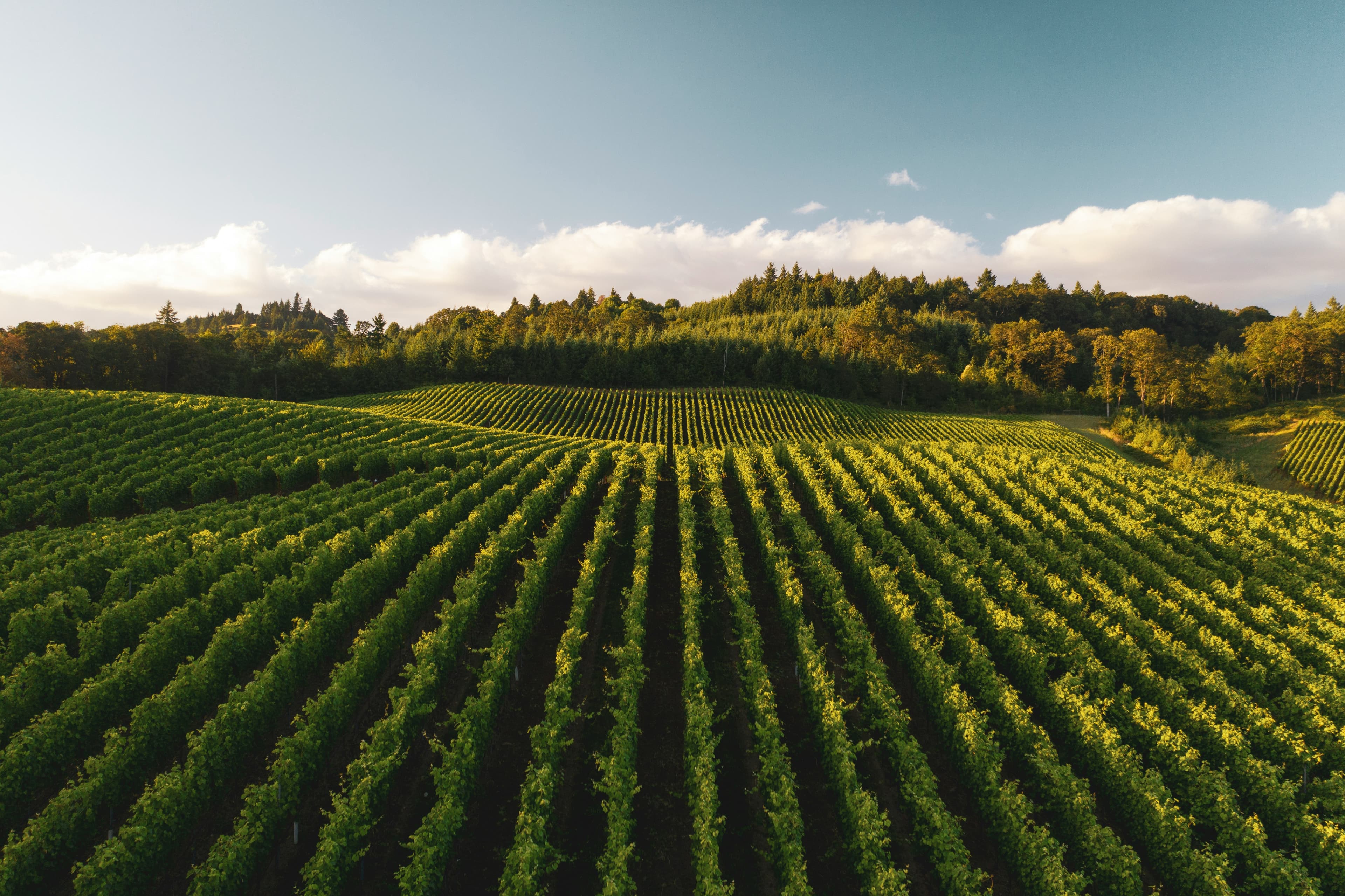
Trees field

Decarbonise your Scope 3 from the root.

Environmental Attribute Certificates demonstrated against your Scope 3 inventory anchored in your supply shed, aligned with SBTi FLAG and the GHG Protocol.

Request strategic informationSchedule a technical meeting

Scope 3 is where the opportunity sits.

For food and beverage manufacturers, 80–90% of the emissions footprint sits in agricultural Scope 3. That's not a problem, it's the lever. Until recently, sustainability teams could not credibly reduce against that lever; the data wasn't available, the methodologies weren't recognised, and the producer relationships didn't exist at scale. That has changed. SBTi FLAG deadlines are now within 24 months for many of you, and the route to meeting them runs through Mediterranean farms that were previously beyond the reach of corporate procurement.


Mediterranean origin sits at the centre of the strategy

The agricultural origin of your raw materials, recognised at the regional supply shed level under mass-balance accounting, can no longer sit outside your climate strategy. With Radica it becomes the lever.

Why insetting 1

A clearer path for sustainability and procurement teams

Sustainability teams can finally reach SBTi FLAG targets that were previously out of range in the Mediterranean. Procurement teams can finally procure the solution their sustainability colleagues have been asking for. The two functions, often pulled in different directions, find common ground.

Why insetting 2

Our response

Insetting. Scope 3 reductions from your supply shed.

Your Scope 3 strategy gets anchored in your own productive territory. Geography stops being a problem to manage and becomes the source of the integrity, traceability, and value of the asset.

Operationally, this works at the regional supply shed level under mass-balance accounting, adaptable to buyer-specific algorithms where your assurance team uses one.

How EACs work

The delta, not the year-on-year reduction.

An Environmental Attribute Certificate represents the difference between measured farm-level performance and a regional supply shed baseline that we agree on with you. It is not a year-over-year reduction at a single farm. It is the verified outperformance of regenerative producers in your supply shed against the regional baseline that would otherwise apply to your inventory. Where your assurance team uses a buyer-specific baseline algorithm, we adapt to it.

EACs are not retired on a public registry the way offset credits are. Instead, they are demonstrated to your auditor through three things: the underlying primary data, the methodology documentation (VM0042 with the VMD0053 module, GHG Protocol Land Sector & Removals Guidance), and the chain of custody from producer to your inventory. Your assurance team validates them as part of your standard CSRD or SBTi reporting cycle.

Verifiable Environmental Attribute Certificates.

01) Primary data

Field-level measurement of soil organic carbon, carbon intensity, water retention, and biodiversity, across the producers in your supply shed, including row crops like wheat and tomato alongside permanent woody crops.

02) Independent verification

Audit-ready results, third-party validated.

03) Full traceability

From the soil to your sustainability committee, at the regional supply shed level, compatible with mass-balance accounting.

04) Ex-post and ex-ante

Most of our inventory is impact already generated. Where you want to finance new impact in your supply shed, we originate new programmes with the producers and supply chain partners in your network. Where you prefer mass-balance procurement, we identify and leverage low carbon intensity farms in your supply shed to curate EACs that match your sourcing footprint.

We work with the methodologies, data infrastructure, and reference frameworks that serious buyers expect, VM0042 with the VMD0053 module, GHG Protocol Land Sector & Removals Guidance, GHG Protocol Land Use Change Guidance, SBTi FLAG, ICROA-aligned, ICR registry where applicable.

How insetting works for your organisation.

We identify your Mediterranean supply shed

We map the Mediterranean origin of your raw materials at the regional supply shed level — and your regulatory and SBTi FLAG exposure.

We implement or curate, as your model requires

For new projects, we originate and implement regenerative practices across the producers and supply chain partners in your supply shed. For mass-balance procurement, we identify low-carbon-intensity farms already in your supply shed and curate EACs to match your sourcing footprint. The choice depends on whether you want to finance new climate impact or recognise existing high performance both are valid, both are auditable.

We measure and verify

Soil organic carbon, carbon intensity, water, biodiversity. Documented, audited, primary.

EACs demonstrated against your Scope 3

Primary data, methodology documentation, and chain of custody — packaged for your auditor and mapped to your inventory under SBTi FLAG and GHG Protocol.

The Radica difference

Building Mediterranean systemic change at scale.

01) A diverse Mediterranean crop portfolio

Permanent woody crops (olive, almond, vineyard, citrus) alongside row crops (wheat, durum, tomato). Different baselines, different practices, one methodology.

02) Soils with specific biological history

Mediterranean soils that demand methodology-specific treatment. Heterogeneous limestone-derived soils, low organic carbon baselines, irregular rainfall, and centuries-old land use histories, all of which Radica's stratification and sampling design accounts for explicitly, rather than applying a methodology built for Northern European or American conditions.

03) Boots on the ground

Our agronomist hub network executes directly in the field — training, monitoring, supporting producers.

04) An organised territorial network

Producers, cooperatives, mills, and processors are already enrolled or in active dialogue. The team and the operational structure to scale this network across the Mediterranean basin are in place including smallholders.

05) Tools, methodology, and execution

Not just a methodology on paper. A team on the ground and a central MRV engine that get the work done.

Frequently Asked Questions

Insetting

Is this insetting or offsetting?

Insetting. The Environmental Attribute Certificates we generate for you are demonstrated against your own Scope 3 inventory under SBTi FLAG and GHG Protocol; they are not carbon credits sold into the voluntary market.

How exactly is an EAC calculated?

It's the delta between measured farm-level performance and the regional supply shed baseline we agree on with you — not a year-over-year reduction at a specific farm. We measure soil organic carbon, carbon intensity, and other indicators at field level using VM0042 with the VMD0053 module, then quantify the outperformance of the regenerative producers in your supply shed against the agreed baseline. Where your assurance team uses a buyer-specific algorithm, we adapt to it.

How is the EAC demonstrated to our auditor?

Three artefacts. First, the underlying primary data from the producers in your supply shed. Second, the methodology documentation — VM0042, VMD0053, GHG Protocol Land Sector & Removals Guidance, GHG Protocol Land Use Change Guidance. Third, the chain of custody from producer to your inventory. EACs are not retired on a public registry the way offset credits are. Each EAC is tracked in Radica's internal registry with a unique identifier, assigned to your inventory, and cannot be assigned to a second buyer. Where buyers request it, the assignment can be mirrored on an external registry or verified by an independent assurance provider.

Is this compatible with CSRD and SBTi FLAG?

Yes. EACs generated by Radica are designed for demonstration under SBTi FLAG and report cleanly into ESRS E1 and E4 disclosures under CSRD. We can support your assurance team directly.

Does this require segregated farm-to-product traceability?

Not by default. EACs are demonstrated at the regional supply shed level under mass-balance accounting frameworks, which is how SBTi FLAG and the GHG Protocol Land Sector & Removals Guidance contemplate supply-chain land emissions. Where buyers want a segregated approach — physical traceability from a specific producer to a specific product — Radica can structure the project to meet that aim, typically through new origination in a defined geographic envelope. We can also pair segregated and mass-balance EACs within a single buyer programme where different product lines have different requirements.

Accelerate your SBTi and net-zero progress, today.

Decarbonise your Scope 3 from origin with high-integrity Environmental Attribute Certificates.

Speak with the teamDownload technical dossier