300,000
Monumental trees
2.5M
Total olive plants
20,000+
Hectares
3,000+
Years of living heritage
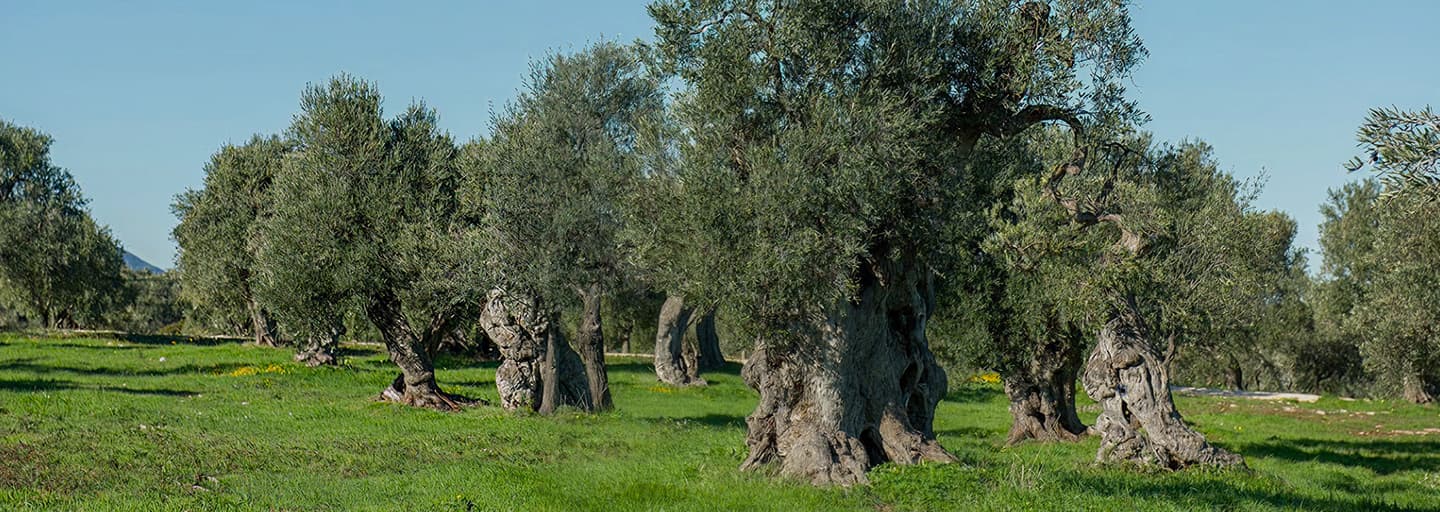
A regenerative conservation programme protecting 2.5 million olive trees, including over 300,000 registered monumentals, some more than 3,000 years old, across Puglia's Piana degli Ulivi Monumentali.
300,000
Monumental trees
2.5M
Total olive plants
20,000+
Hectares
3,000+
Years of living heritage
Five kilometres south, Salento is already silent. 183,000 hectares destroyed. 21 million trees dead. The same convergence is advancing north toward 300,000 of the world's oldest trees.
90% of the Piana's olive trees face death within 5–10 years.
Xylella fastidiosa
Advanced 150 km north in 15 years. EU eradication policy has failed, only 0.14% of symptomatic trees test positive. EFSA confirmed eradication is impossible at landscape scale.
Fungal pathogens
Neofusicoccum spp. cause symptoms clinically indistinguishable from Xylella and can kill faster. Zero public monitoring exists. Many "Xylella deaths" are uncounted fungal deaths.
Climate stress
Puglia recorded +2.1°C above baseline in 2022–23. Drought lowers immunity and amplifies bacterial and fungal virulence. Current legislation does not address climate stress.
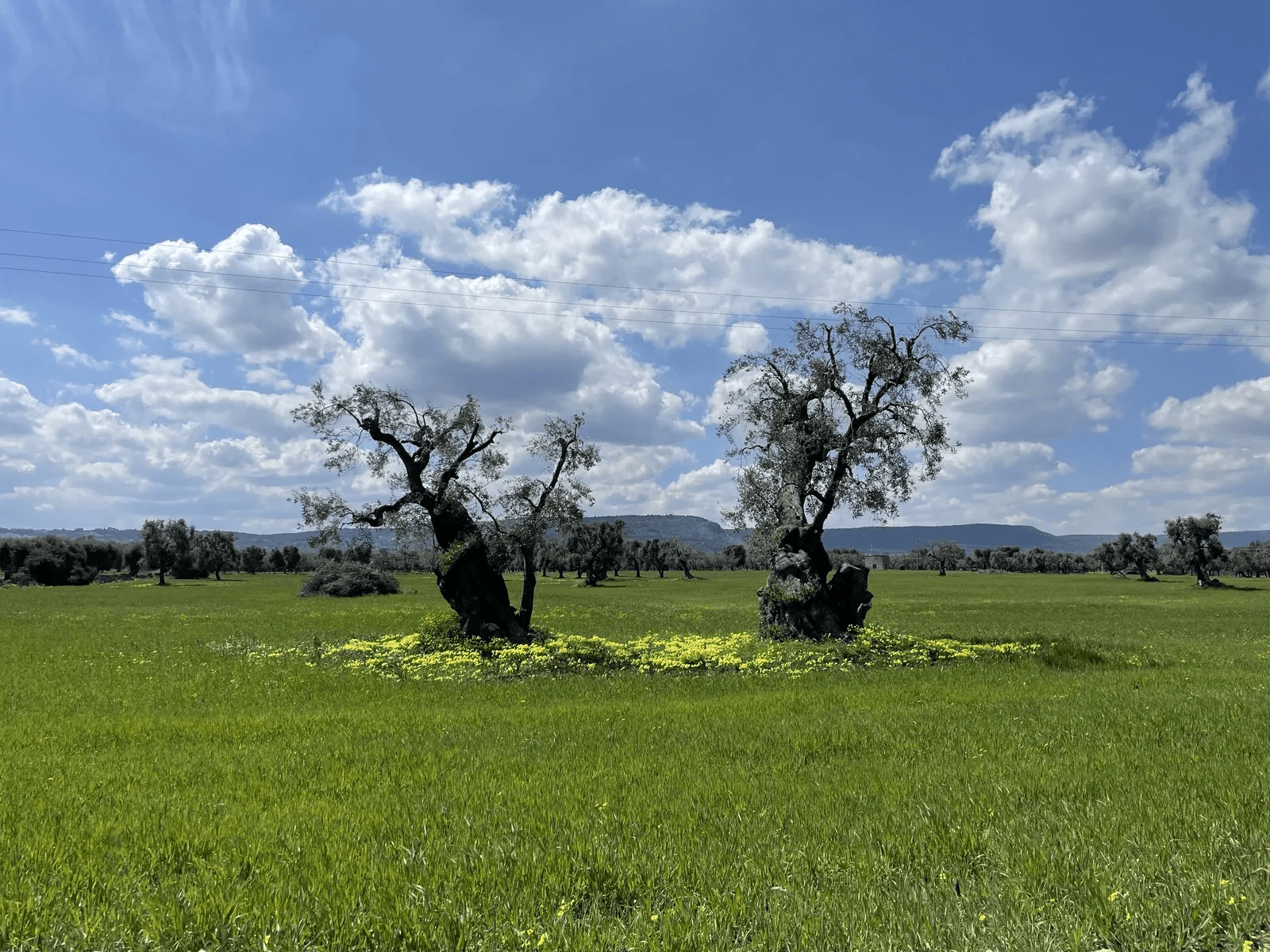
Ancient sentinels
Two monumental olive trees rise from a carpet of wildflowers, silent witnesses to millennia of Mediterranean history
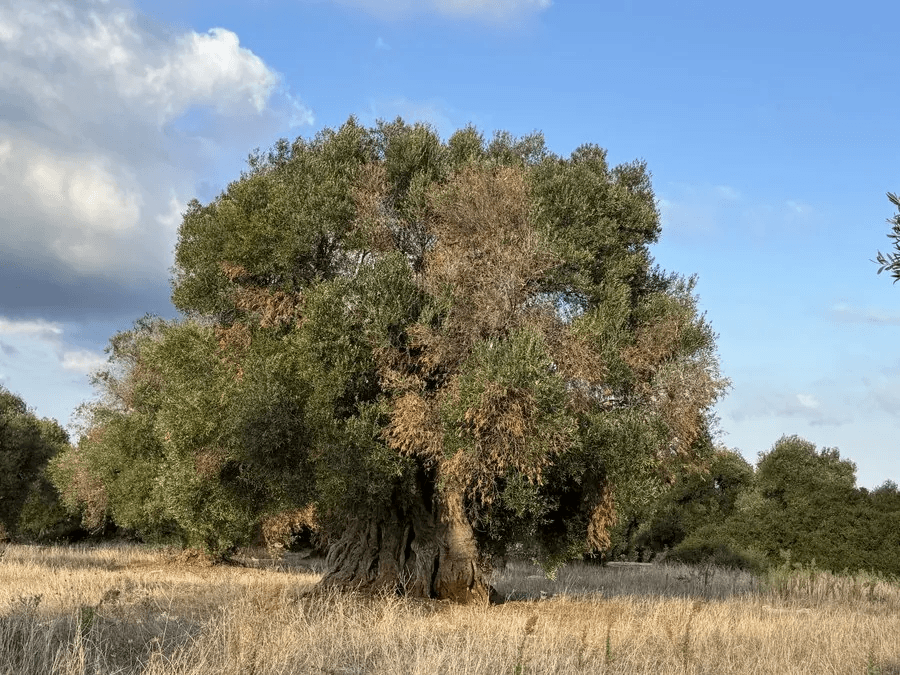
Under threat
Xylella die-back creeping through the canopy of a monumental tree, the existential crisis made visible
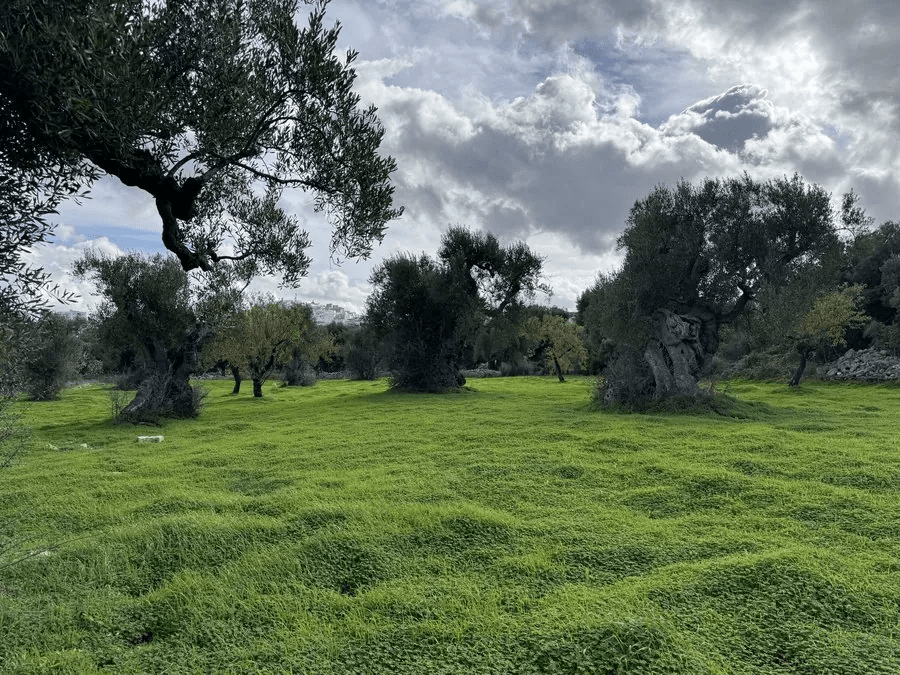
Resilient grove
Ancient trunks rooted in green pasture under gathering storm clouds, resilience embodied across centuries
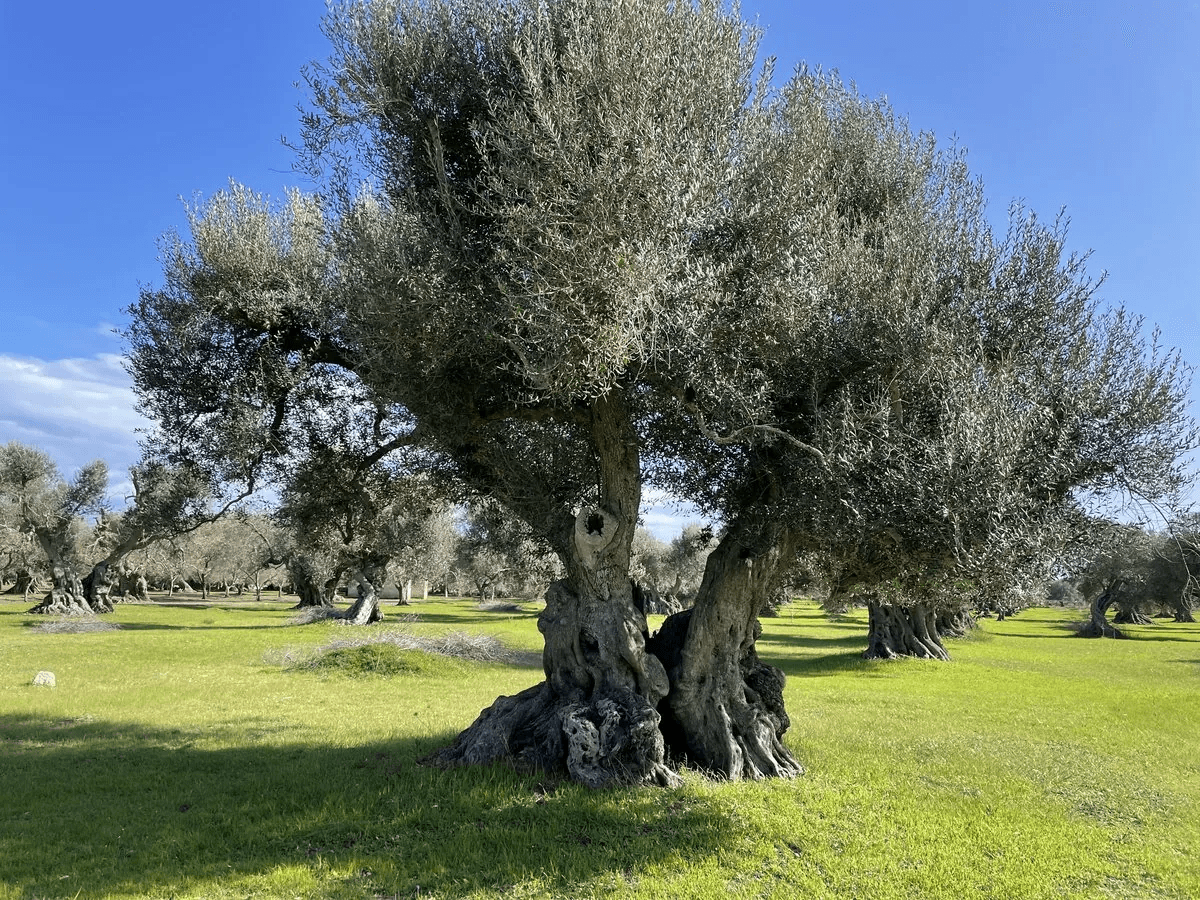
Living sculpture
A monumental trunk split into a natural arch, centuries of slow growth sculpting wood into organic architecture
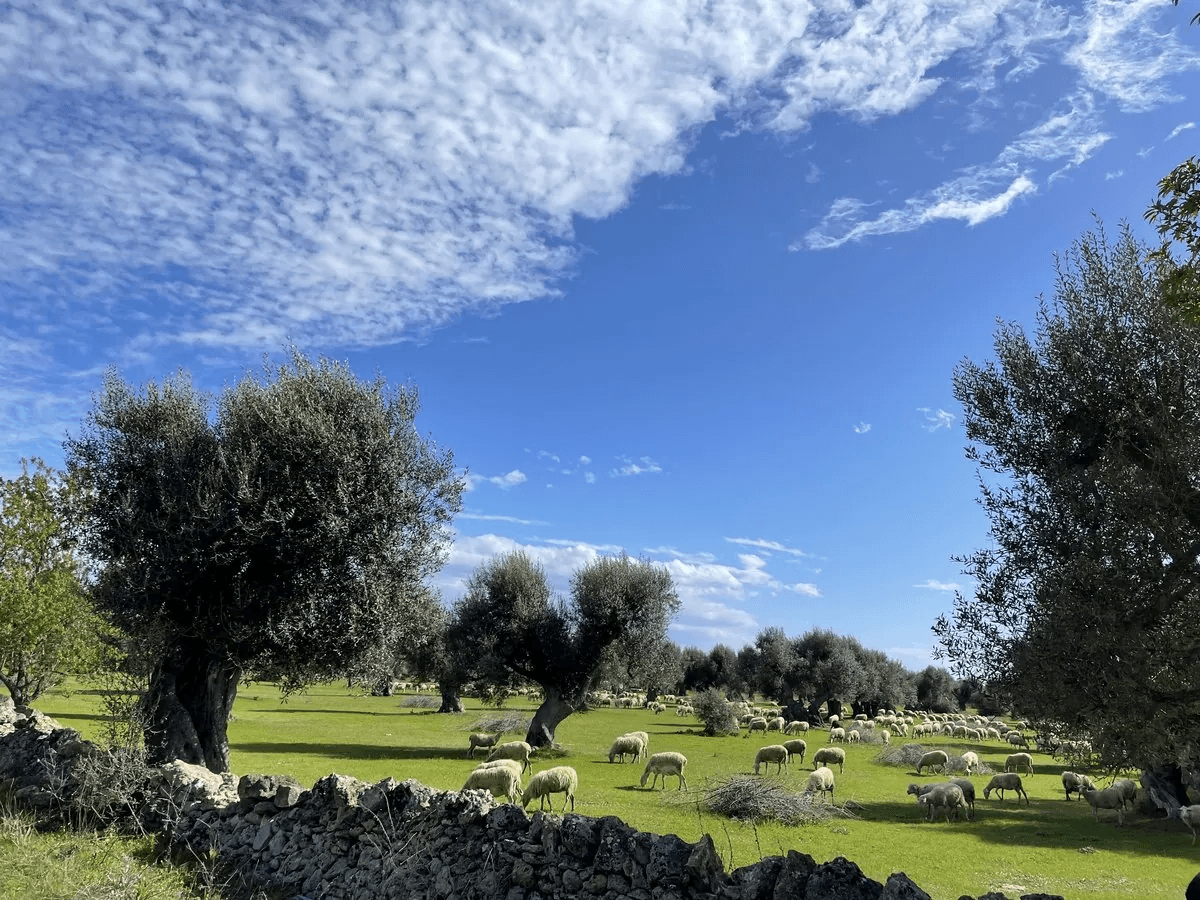
Pastoral heritage
A flock grazing beneath ancient olives, the agro-pastoral tradition that has sustained these groves for generations
We cannot eradicate Xylella or fungal pathogens. We can build tree immunity, restore soil ecology, and engineer ecosystem resilience keeping 80%+ of heritage trees alive. The integrated protocol is the first coherent response to a genuinely multifactorial threat.
No-till farming, cover crops, and biodiversity corridors restore soil microbiome integrity — rebuilding mycorrhizal networks ancient olive roots depend on.
Science-proven biostimulants, compost tea, and targeted organic amendments restore plant immunity at a fraction of conventional treatment costs.
On-site pyrolysis of olive pruning biomass creates stable soil carbon with 500–1,000 year residence times and improves water retention by 20–35%.
IoT sensors, satellite multispectral analysis (Sentinel/PlanetScope), drone surveys, and AI-driven targeting enable intervention before symptoms appear.
Native hedgerows create wildlife corridors that link fragmented habitat patches and introduce natural predators of Xylella's insect vectors.
Each of 300,000 monumental trees individually catalogued with a blockchain-verified carbon and health record the world's first digital ancient olive archive.
The €5–10M required to conserve 20,000 hectares of monumental olive groves cannot come from public budgets. Regional Law 14/2007 and Natura 2000 designations protect these trees on paper but provide nothing for active regeneration. Carbon finance is not one option among many it is the only mechanism that can deploy capital at the scale and speed this landscape demands.
Volume: 80,000–100,000 tCO₂ per year
Pricing: €45–55/tCO₂
Methodology: VM0042 + VM0047 + C-Farms
Soil organic carbon accrual across 20,000 hectares of olive groves under the 13-practice regenerative protocol. Operational today through AgroEcology_Italy. CCP-compliant. 75% of revenues to agricultural families at zero participation cost.
Volume: 30,000–45,000 tCO₂ per year
Pricing: €150–200/tCO₂
Methodology: Puro.earth / Isometric
Olive pruning residue (~60,000 tonnes/yr) pyrolysed at a dedicated logistics centre, converted to stable biochar, returned to project soils. Permanence: 500 –1,000 years. Co-located composting produces compost and compost tea for soil biological activation.
Beyond the two operational removal streams, Guardians of Time is developing a compliance-grade avoidance pathway against the verified loss of stored carbon when monumental trees die. The full scale of this landscape, 10+ million tonnes of stored carbon, points to a substantial avoidance opportunity over the project's 45-year crediting period. No avoidance credits are being issued or sold today, and the pathway is subject to regulatory developments at Italian and international level.
110,000–145,000tCO₂/yr removal at steady state
45-yearcrediting period
Est. €400 Mdistributed to agricultural families (75% of carbon revenues)
Radica retains 25% for verification, MRV, coordination, full transparency, no hidden margins.
110,000–145,000
tCO₂/yr removal at steady state
45-year
crediting period
Est. €400 M
distributed to agricultural families (75% of carbon revenues)
Radica retains 25% for verification, MRV, coordination, full transparency, no hidden margins.
Across Monopoli, Fasano, Ostuni, and Carovigno, families whose livelihoods and multi-generational heritage are bound to these trees.
SOC enhancement is the most powerful drought-resilience infrastructure in Mediterranean agriculture. At 90% mortality, the Piana would permanently lose the equivalent of a 150–300 billion litre annual water reservoir.
The Piana is under active UNESCO candidacy. This project's conservation framework directly strengthens the case.
Full alignment with EU NRL, Biodiversity Strategy 2030, and SDGs 13 and 15. The Piana includes Natura 2000 zones.
VM0042 + VM0047 + C-Farms for soil organic carbon. Puro.earth / Isometric for biochar permanence. Both streams have already validated through AgroEcology_Italy (75,689 tCO₂e verified, 2024–25).
All removal credits issued through the ICR Registry. Italy's first and only soil carbon project developed under an ICROA-endorsed standard. ICR provides a complimentary risk assessment for buyers at no additional cost.
Independently verifying that the project delivers measurable biodiversity gains and direct economic benefits to agricultural families beyond the carbon claim alone.
Pilot Partner
Associazione A.M.O. Puglia
150 hectares of monumental olive groves under active monitoring, with 25 hectares of owned/leased land as the operational base. The first on-the-ground pilot of the integrated conservation protocol.
Visit site
Institutional Partner
Parco Naturale Regionale Dune Costiere
Regional natural park established 2006. CETS 2012, Council of Europe Landscape Prize special mention 2019.
Visit site
Research Partner
Università degli Studi di Bari Aldo Moro
LiDAR and Mobile Laser Scanning for above-ground biomass quantification. The first spatially explicit biomass baseline for carbon stock accounting at landscape scale.
Visit sitePartners in development



CREA
(compost tea formulation)
CNR
(Xylella epidemiology)
CMCC
(climate resilience monitoring)
Sponsor
Secure verified carbon assets from one of Europe's most rigorous removal programmes.
Forward offtake
Build long-term supply of CCP-compliant Mediterranean removals.
Philanthropic / CSR
Help protect an irreplaceable cultural and ecological heritage. Proud supporter of the 1% for the Planet framework.
Your commitment ensures they outlast us all.

In order to improve our services, we use our own and third-party cookies to collect statistical information. You can configure your preferences using the designated button. If you wish, you can obtain more information through our Cookie Policy.
In order to improve our services, we use our own and third-party cookies to collect statistical information. You can configure your preferences using the designated button. If you wish, you can obtain more information through our Cookie Policy.