Radica is systematising its five-year experience as a project developer of carbon farming programmes by integrating an MRV system developed by the Spanish company Esférico. It continues its work of transforming agricultural resilience into high-quality, verifiable financial assets for the global carbon market.
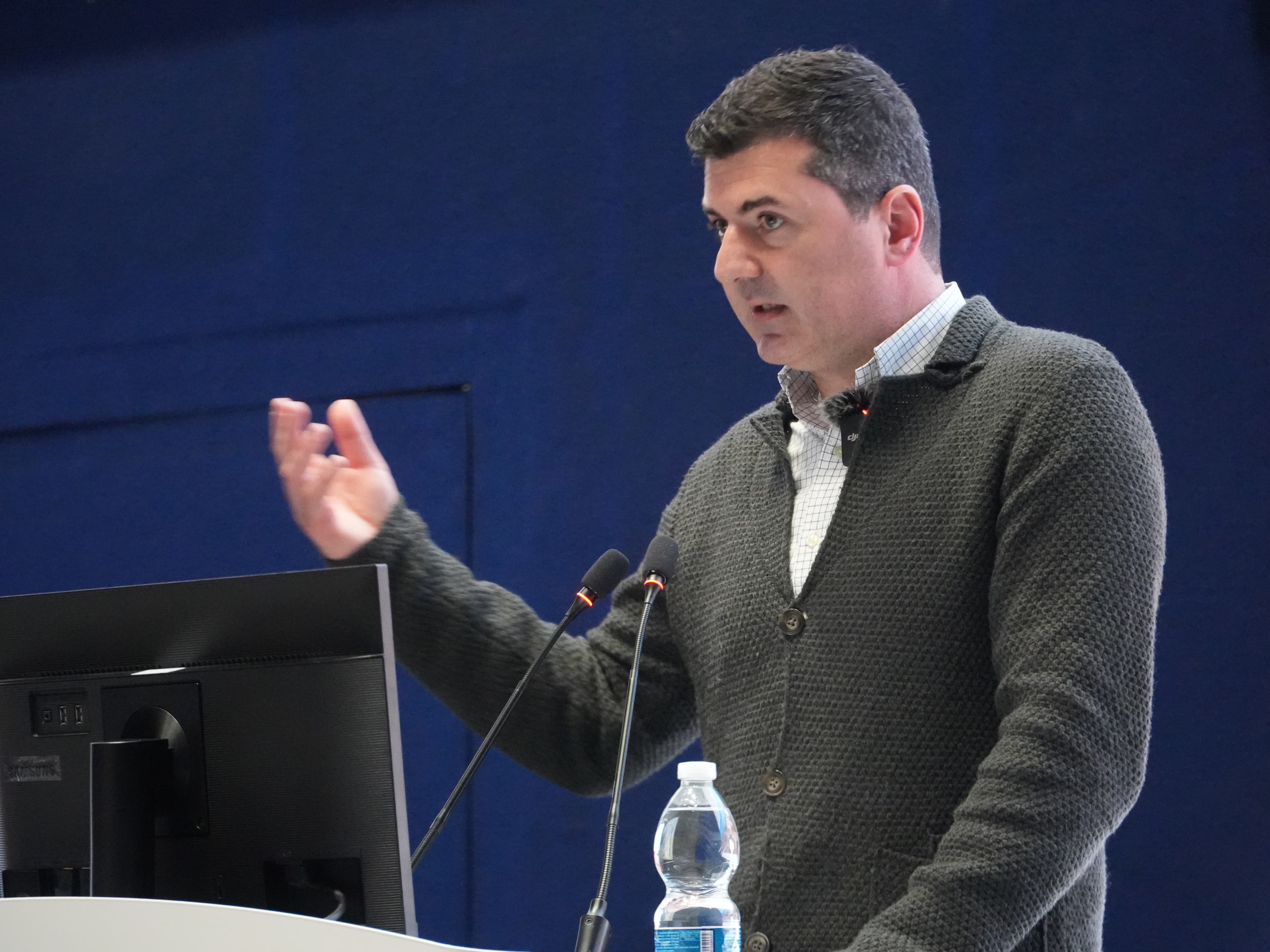
On 17 March, during the European Carbon Farming Summit 2026 in Padua, the Apulian company Radica (the evolution of Alberami, the renowned number 1 in Italy) presented a journey that goes beyond digital: a real, tangible experience of decarbonisation born out of the climate emergency in Southern Italy.
The story of Radica, led by CEO and founder Francesco Musardo, stems from a critical need in the region of Apulia, where ancient olive trees, the heart of the Mediterranean landscape, were being devastated by the bacterium Xylella fastidiosa. What began as a resistance effort has been transformed into a model of regenerative agriculture. These practices have not only increased the resilience of soils and trees in the face of pests, but have also opened up an unprecedented economic avenue for farmers: the generation of high-quality carbon credits.
Following five years of consolidated experience as project developers, Radica is now taking the next step towards a global scale. The key to this evolution is the integration of the MRV (Monitoring, Reporting and Verification) system developed by the Spanish company Esférico.
This alliance allows the automation and scientific rigour of measuring sequestered carbon. Today, MRV is the determining factor for the certification and validity of credits on international markets, ensuring that every tonne of CO2 reported is real, permanent, and traceable.
Francesco Musardo, CEO of Radica, highlighted the importance of this qualitative leap in Padua: "We are not just digitalising the field; we are bringing five years of experience in regenerating lands wounded by Xylella. With Esférico's technology, we ensure that the farmer's resilience work becomes an indisputable financial asset in global markets."
Compliance and Regulations: The Value of Reliable Data
Radica helps companies navigate the complex European regulatory landscape (CSRD, EUDR, and SBTi-FLAG), which mandates transparency and emission reductions throughout the agrifood supply chain.
There are three European regulations governing and binding first large companies and later SMEs: CSRD, EUDR, and SBTi-FLAG. In the production, processing, preservation, and transport sector of food and beverages, the predominant climate impact relates to 'in-field' activities.
The three European regulatory instruments require emissions to be measured and reduced using certified data from individual farms, moving away from aggregate estimates or declarations: verifiable, locally relevant, and traceable data are required.
In the Mediterranean basin, 'in-field' production fragmentation is very high. While it is true that EU regulations will not impact agricultural and agro-industrial SMEs immediately, two problems remain: they will soon be required to adapt to the rules, and many of them are already suppliers to large companies (which are currently subject to directives and regulations) that require reliable data for their reporting.
The Apulian company Radica, based in Ostuni, integrates satellite data, land registry maps, biophysical soil models, and agronomic data collected directly from farms. Following this operation, it adopts the 'VM0042 Improved Agricultural Land Management' methodology to generate measurable and verifiable environmental data on a large scale.
Finally, it creates 'tailor-made' projects: for a single agricultural area, it can demonstrate the impact in terms of decarbonisation (within food & beverage supply chains) while also generating agricultural carbon credits destined for the voluntary market. Credits are verified by independent third parties and registered with the International Carbon Registry (ICR v6.0) to provide traceability, transparency, and compliance with international standards.
Francesco Musardo, CEO of Radica, summarised his company's role in Padua: "We digitalise farms, transform environmental data into financial assets, and make possible what until now was not: connecting the work of farmers to global carbon markets."
Today, Radica manages over 20,000 hectares and involves 650 farmers across Italy and Spain. It has completed two credit issuance cycles, generating over 83,000 verified carbon removals. The Apulian company started as a project focused on permanent woody crops — the plants with the highest carbon sequestration potential and a landscape pillar of the Mediterranean — including olive groves, orchards, citrus groves, nut orchards, and vineyards. These crops have an estimated potential 3–4 times higher than arable cereal crops in Northern Europe, though the company covers the full spectrum of Mediterranean crops.
Press Office
Federica Ielapi | federica@tellerspr.com
Luca Signori | team@tellerspr.com